Home › Best Espresso Machines 2026
Coffee Gear · Updated October 2026Best espresso machines 2026: the beginner-to-enthusiast ladder
The five, compared honestly
| Product image | Machine | Street price | Grinder | Baskets | Steam wand | Link |
|---|---|---|---|---|---|---|
| 1De'Longhi Stilosa (EC260BK)Best overall | ~$99.95 street (list $149.95) | None | Pressurized only | Manual Panarello-style | No live buy link yet | |
| 2Breville Bambino Plus (BES500) | ~$399.95 street (MSRP $499.95) | None | Pressurized + unpressurized | Automatic | No live buy link yet | |
| 3Breville Barista Express (BES870) | ~$499.95 street (MSRP $699.95) | Built-in conical burr | Dual-wall + single-wall | Manual | No live buy link yet | |
| 4De'Longhi La Specialista Arte Evo (EC9255M) | ~$499.95 street (MSRP $699.95) | Built-in conical burr | Non-pressurized | Manual pro wand | No live buy link yet | |
| 5Gaggia Classic Pro · E24 current US model (RI9380) | $499 sale ($549 MSRP) | None | Commercial 58mm | Commercial-style manual | No live buy link yet |
Street prices are October 2026 observed ranges and swing $100–200 on sales cycles; confirm the live price at checkout.
The ladder: how to read this list
Decide: all-in-one or separate grinder?
The Barista Express and Arte Evo grind their own beans: one box, one footprint. The Bambino Plus, Stilosa, and Gaggia demand a separate espresso grinder ($150–250+ of real added cost). If that surprises you, you want an all-in-one.
Decide: pressurized or real espresso?
Pressurized baskets fake crema and forgive bad grinds: good for testing the waters. Non-pressurized baskets (Arte Evo, Gaggia with the right baskets, Bambino Plus when you add a grinder) make genuine espresso and teach you dialing in. Pick your side before you pick a machine.
Milk: auto or manual?
The Bambino Plus steams hands-free (3 temps × 3 textures). Everything else here is a manual wand: more control, more learning curve. If your household runs on lattes and you don't want a new skill, the Bambino Plus is your machine.
Verify the price at checkout
Street prices here swing $100–200. The Arte Evo's $200 manufacturer rebate ended October 10, 2026: check whether it was renewed. Every card carries the October 2026 observed range; confirm the live number before you buy.
The picks, in depth
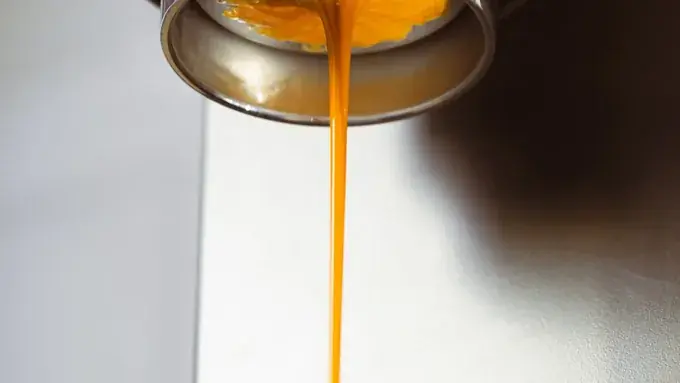
Mahmoud Yahyaoui · Pexels 28917507
De'Longhi Stilosa (EC260BK) · the ~$100 experiment
“The cheapest way to test whether you enjoy the ritual before committing to the hobby.”
- 15-bar pump; stainless steel boiler (0.15L), 1100W; fast heat-up
- 51mm portafilter: PRESSURIZED baskets only (fake-crema style, not true espresso)
- Manual Panarello-style steam wand (bubbly foam, not microfoam)
- Grinder: NONE (needs a separate espresso grinder)
- Plastic-heavy build; flimsy included tamper; vibrates/loud
Why it made the list
- Under-$100 way to learn espresso basics before committing
- Stainless steel boiler (0.15L) is genuinely unusual at this price
- Compact and simple for first-timers
Seen ~$99.95 street price, list $149.95 (Oct 2026). Verify at checkout
Breville Bambino Plus (BES500) · the milk-drink lover's pick
“Serious about milk drinks with zero warm-up wait: hands-free microfoam, ready in about 3 seconds.”
- ThermoJet heating: ready in ~3 seconds
- 15-bar pump; soft pre-infusion → ~9-bar extraction
- Automatic steam wand: hands-free, 3 milk temps × 3 texture levels (manual mode too)
- 54mm portafilter; pressurized + unpressurized baskets included
- Grinder: NONE (budget another $150–250 for a separate espresso grinder)
- 2-yr warranty; tiny drip tray fills in 2–3 drinks; light body can slide on counter
Why it made the list
- ThermoJet ~3-second heat-up: near-instant
- Foolproof automatic microfoam, good even with oat milk
- Most forgiving true-espresso starter for milk-drink lovers; tiny footprint
MSRP $499.95; seen at $399.95 (Oct 2026). Verify at checkout
Breville Barista Express (BES870) · the best all-in-one starter
“The default answer for most people starting out: a complete box, forgiving, and the pressure gauge teaches you more than any manual.”
- Thermocoil with digital PID temperature control; ~30–45 sec warm-up
- 15-bar Italian pump; low-pressure pre-infusion → ~9-bar extraction
- Built-in conical burr grinder: 16 grind settings
- 54mm stainless portafilter; dual-wall (pressurized) + single-wall baskets included
- Manual steam wand (auto-frothing is a myth on this model: that's the Barista Touch)
- Single heating circuit: cannot brew + steam simultaneously; 1-yr warranty
Why it made the list
- Most complete starter setup in one box: no separate grinder needed
- Analog pressure gauge is a great learning tool
- Owner consensus: espresso quality ~90–95% of pricier rivals
MSRP $699.95; seen at $499.95 (Oct 2026). Verify at checkout
De'Longhi La Specialista Arte Evo (EC9255M) · real espresso in one box
“Non-pressurized baskets and a pro steam wand at this price: real espresso and genuine latte art in one box.”
- Thermoblock with Active Temperature Control (3 brew-temp profiles); ready under 1 min
- 15-bar Italian pump; 51mm portafilter with NON-pressurized baskets (real espresso, not fake crema)
- Built-in conical burr grinder: 8 grind settings (limited vs rivals)
- Manual professional steam wand on ball joint: genuine microfoam
- Cold Extraction 'cold brew' mode: ~5-min cycle makes chilled espresso concentrate, thin vs real 12-hr cold brew
- 57.5 oz / 1.7L tank; hot-water spout; loud grinder (81 dB cited)
Why it made the list
- 51mm non-pressurized baskets + pro steam wand = real espresso and genuine latte art at this price
- Included barista kit (tamper, funnel, mat); compact retro look
- Cold Extraction mode for a quick chilled-coffee option (it's concentrate, not real cold brew)
MSRP $699.95; seen at $499.95 with $200 mfr rebate (rebate ended 10/10/2026; check for renewal). Verify at checkout
Gaggia Classic Pro · E24 current US model (RI9380) · the decade machine
“The only machine here that grows with you for a decade: 58mm commercial portafilter, brass boiler, a mod platform.”
- Single boiler, lead-free brass (3.5 oz), new for the E24
- 15-bar Italian Ulka pump; OPV factory-set to 9 bar on the E24 (older units shipped 12-bar)
- 58mm commercial-standard portafilter
- Commercial-style stainless steam wand, 2-hole tip, manual
- 3-way solenoid; all-metal build; 5–10 min warm-up; temp-surfing needed between brew and steam
- Grinder: NONE (separate espresso grinder mandatory; real startup cost ~$600–700 with machine)
Why it made the list
- 58mm commercial-standard portafilter: the only machine here with true commercial size
- Lead-free brass boiler (3.5 oz): best-in-class thermal stability at this price
- The mod/repair platform: PID kits, pressure gauges, huge forum community; 10–15+ yr lifespan potential
MSRP $549.00; Whole Latte Love $499.00 sale (Oct 2026). Verify at checkout
How we picked these: the receipts behind the ranking
- Verified specs (heaviest weight). every spec on these cards was verified against manufacturer pages and 2026 reviews; a spec that couldn't be verified was omitted, not guessed.
- Street prices. observed October 2026 ranges from retailers; prices swing $100–200 on sales cycles, so every card says 'verify at checkout'.
- Owner sentiment. aggregated across espresso communities including r/espresso; claims about in-cup quality reflect consensus owner reporting, not our lab bench.
- Not in the launch score yet: hands-on testing. Those publish with the first lab report and can move the ranking. We say this loudly so you can hold us to it.
- Independence: a researched assessment, not hands-on testing; rankings are locked before any affiliate program lookup, and commissions never move rankings.
Where these five sit: the three machine families
Every one of our five picks is a semi-automatic: you grind, dose, tamp, and pull the shot yourself, with a portafilter and a steam wand. But that's only one of the three families buyers walk into, and knowing the other two saves expensive mistakes:
- Manual-leaning “automatic” machines (e.g. the Ninja Luxe Café line): still use a portafilter and grind, but add guided tamping, built-in milk frothing, and walk-you-through workflows. Less technique required than our ladder, more involvement than a superautomatic. A genuine middle lane we didn't rank.
- Superautomatics (bean-to-cup): grind, tamp, brew, and milk happen inside one box at the touch of a button. Competitor testers consistently flag the trade: far less involvement, but you give up dialing in, repair access is worse (everything is one integrated system), and the milk drinks are frothed, not steamed. If your household will not learn a portafilter, this family, not a cheaper semi-auto, is the honest alternative.
We rank only semi-automatics here because they're the family where skill and budget choices actually change the cup. A superautomatic is a different purchase with different trade-offs, not a cheaper rung on this ladder.
The maintenance that decides how long they last
Competitor guides that keep machines for long-term testing say the same thing: the machine is only as durable as its maintenance routine. Scale is the number-one killer of home espresso machines, and owner reporting lines up with it:
- Descale on your water's schedule, not the calendar.Hard-water households descale far more often; soft water stretches the interval. Machines with a built-in filter slot (the Philips family's AquaClean is the famous example) buy you the longest intervals.
- Rinse the group head after every session. A quick flush with no coffee clears grounds before they bake on: takes seconds, matters a lot.
- Backflush monthly with the right detergent. Oils build up inside the group and in the three-way valve; an espresso-machine detergent backflush (follow the manual) is the scheduled deep clean.
- Parts availability is a feature. The Gaggia Classic Pro E24 is the most serviceable machine here: owners rebuild them for 10–15 years, and the solenoid three-way valve is the part most likely to fail and most likely to be repairable. Compact machines with proprietary internals are harder to service when something goes.
These are researched maintenance norms from owner communities and 2026 competitor guides, not instructions for your specific machine; always follow the manual first.
The real total: accessories beyond the machine
Competitor roundups hammer one point that belongs in every espresso budget: the machine is roughly half the system. Beyond the grinder (covered in the FAQ above), the unsexy extras that actually change daily shots:
- A proper tamper. The plastic tampers bundled with budget machines are inconsistent; a flat, weighted tamper is one of the cheapest upgrades to shot consistency.
- A 0.1g precision scale. Dosing by weight instead of by the grinder's timer is the single biggest repeatability upgrade, and the reason automatic volumetric stops feel inconsistent.
- A knock box and a milk pitcher. Knocking out pucks into a box instead of the trash, and a pitcher sized to your drink, are daily workflow wins that cost little.
- Fresh beans, and water that isn't hard. Stale beans and hard water undo more than any machine upgrade fixes. A simple in-tank filter is cheap insurance for both flavor and descaling intervals.
Budget $100–$200 beyond the machine (before the grinder) for these, or buy them once and carry them through every machine upgrade.
Ready to price the shortlist? The full espresso machine catalogue ranks all eight machines we track, with every listed price checked in October 2026.
Questions, answered
Pressurized vs. non-pressurized baskets: what actually changes?
Do I need a separate grinder?
Does a '15-bar pump' mean 15 bar of pressure at the puck?
Why does r/espresso tell beginners to skip the Stilosa?
Is the La Specialista Arte Evo's 'cold brew' mode real cold brew?
What is pre-infusion, and does it matter?
What does a 3-way solenoid valve do, and should I care?
Can I pull a shot and steam milk at the same time?
Why do you say 'verify at checkout' on prices?
Final verdict
For most people starting out, the Barista Express remains the default answer: complete box, forgiving, and the pressure gauge teaches you more than any manual. If lattes are the whole point and you'd rather not learn a steam wand yet, get the Bambino Plus; just budget the grinder. If you're past the starter phase and want the highest ceiling under $550, the Gaggia Classic Pro E24 (9-bar factory OPV, brass boiler, 58mm group) is the only machine here that grows with you for a decade.
One rule for the whole list: never buy on MSRP. The Barista Express and Arte Evo both dip roughly $200 below list on sale. Set a price alert and strike when they do.